At a glance
BPP: Raise a Query
Designed a self-service support journey to help learners get clearer guidance and reduce friction when raising queries.
OVERVIEW
As part of the wider BPP mobile app experience, I led the end-to-end design of the “Raise a Query” experience, aimed at helping students quickly access support for issues related to finance, accounts, and general administration.
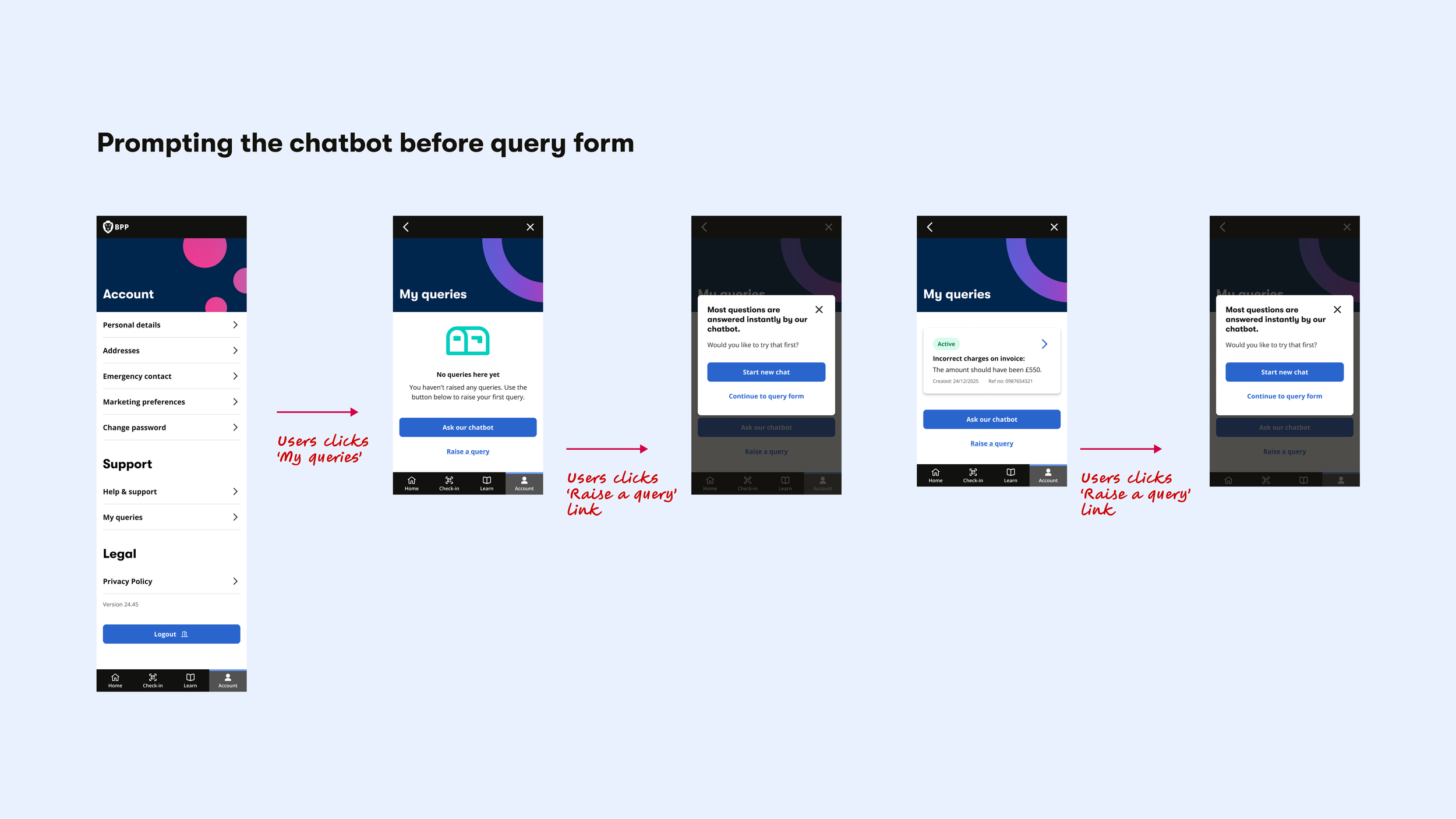
The goal was to reduce friction in the support journey by encouraging self-service first, while still allowing students to submit a query when needed.
THE PROBLEM
Students often struggled to:
Know where to go for support
Find the correct contact point for different issues
Access relevant help content quickly
Track existing support requests
Locate the right information in the Help Centre
At the same time, support teams were receiving large volumes of repetitive queries that could potentially be resolved through clearer guidance or self-service support.
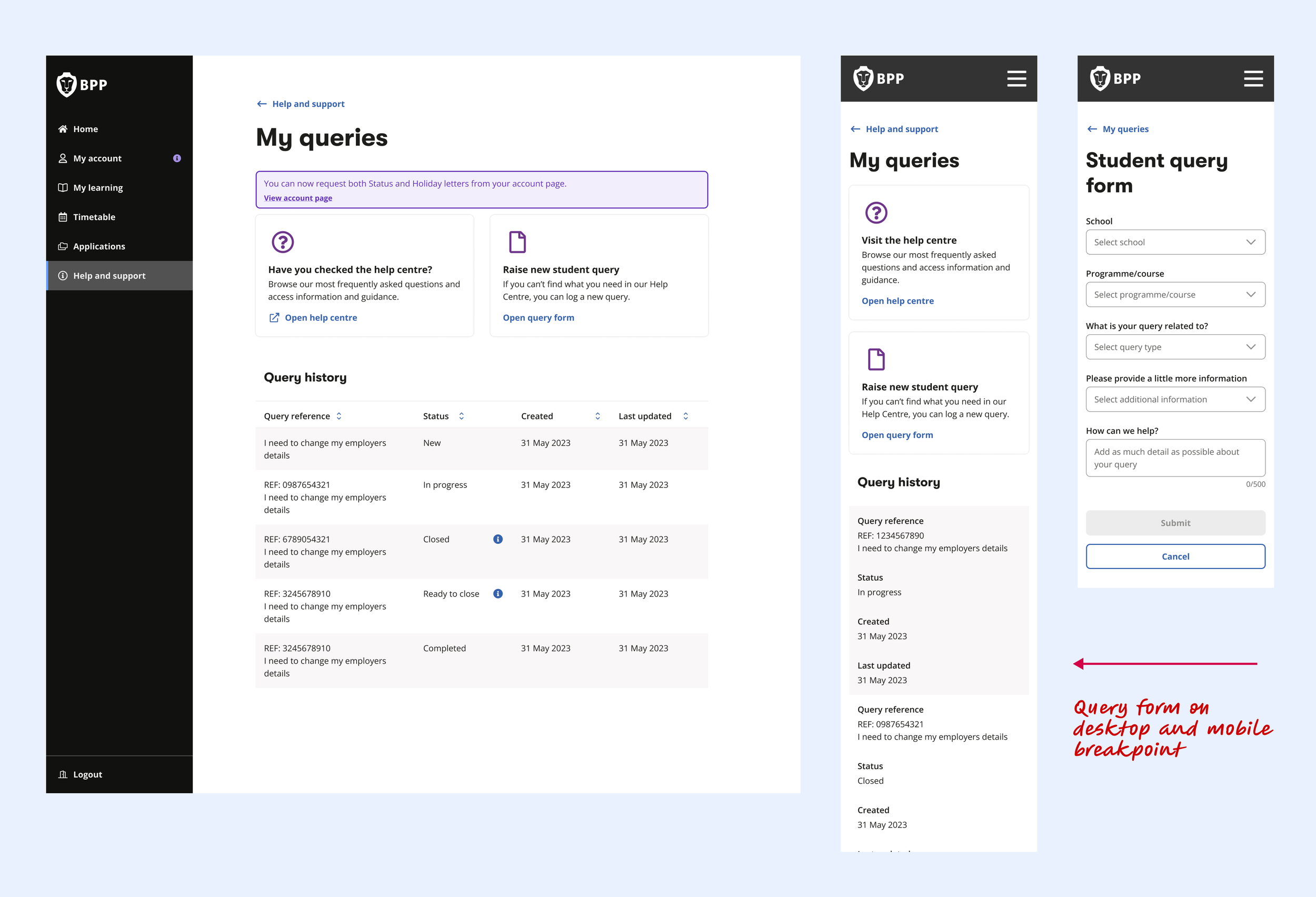
The previous Raise a Query experience only existed on the desktop hub (with a mobile breakpoint, shown above). The mobile app had no native support journey, so this project defined the first mobile‑first support flow.
RESEARCH & INSIGHTS
Research and support analysis revealed several recurring behaviours:
Students raised tickets before attempting self‑service because they lacked confidence in selecting the right category.
A large portion of queries were repetitive and already answered in help centre content.
Duplicate tickets were common, increasing operational load and slowing response times.
These insights shaped a more guided, intelligent support flow that encouraged self‑service while still enabling escalation.
KEY FEATURES
Guidance & Personalisation
Course and programme selection
Contextual help centre nudges
Confirmation prompts after viewing articles
Prevention & Efficiency
Duplicate ticket detection
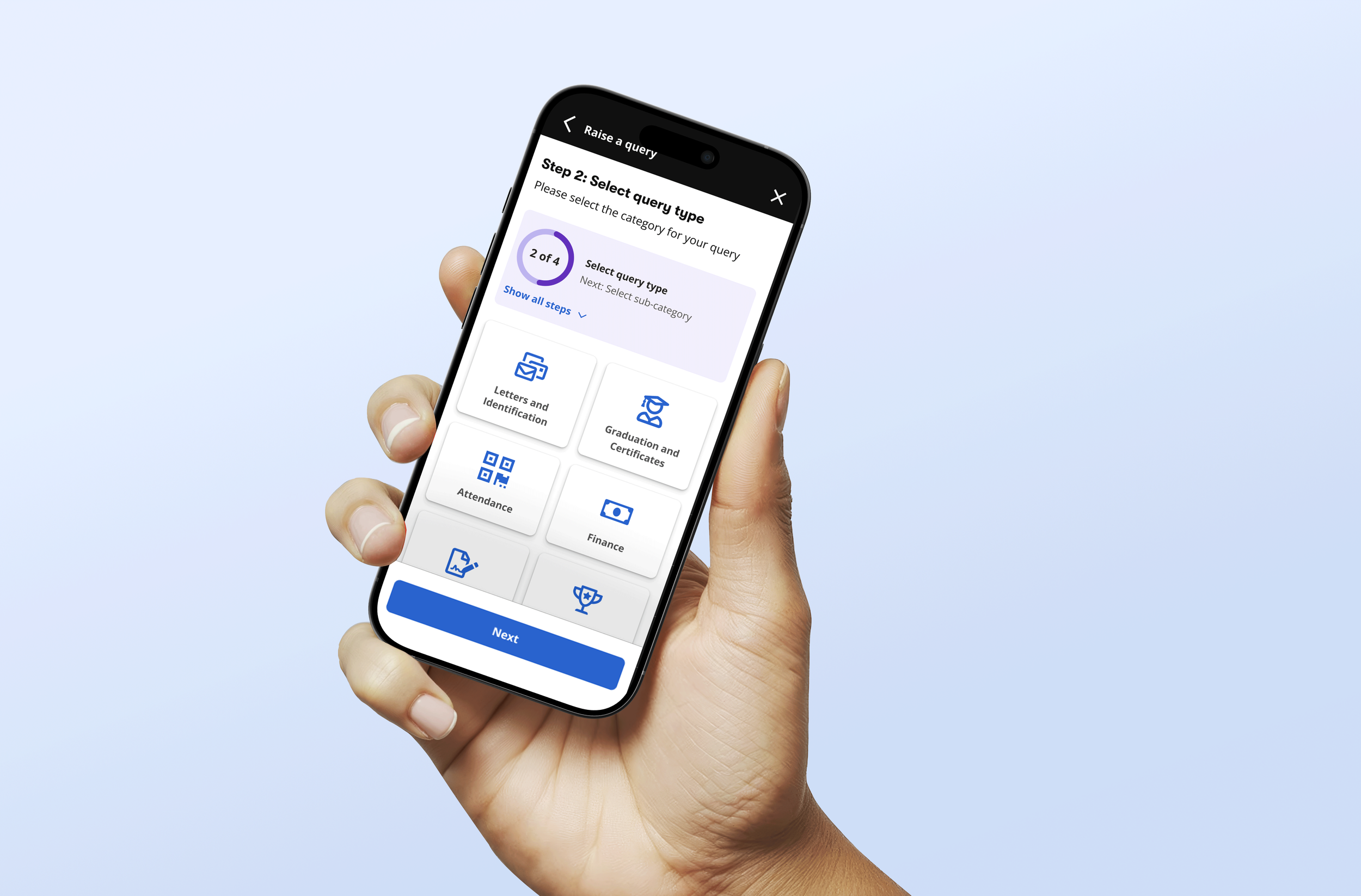
Clear categorisation and sub‑categories
Reassurance and progress indicators
Escalation Support
File uploads
Success and error states
Clear escalation path if self‑service fails
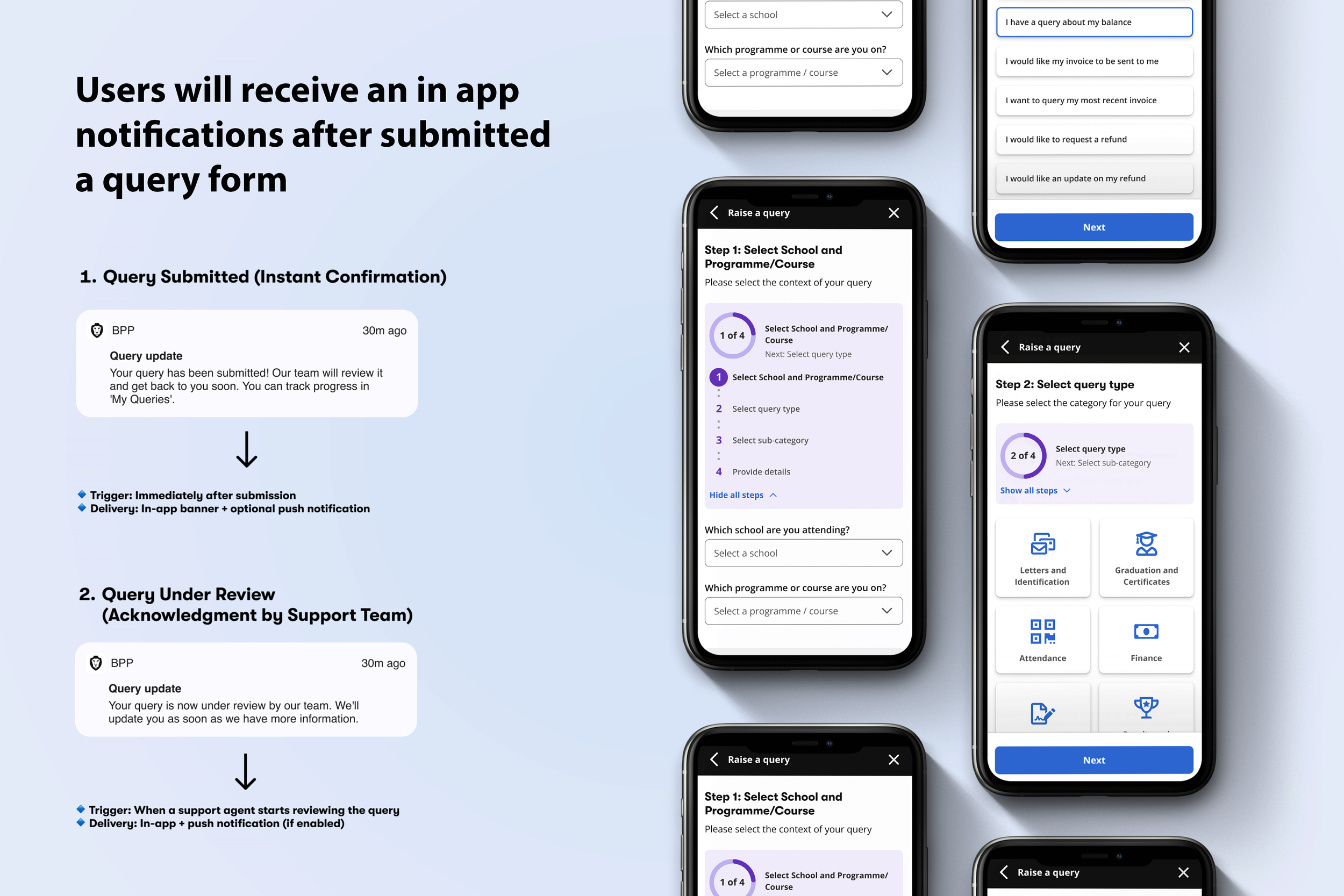
CONTINUOUS INSIGHT & ITERATION
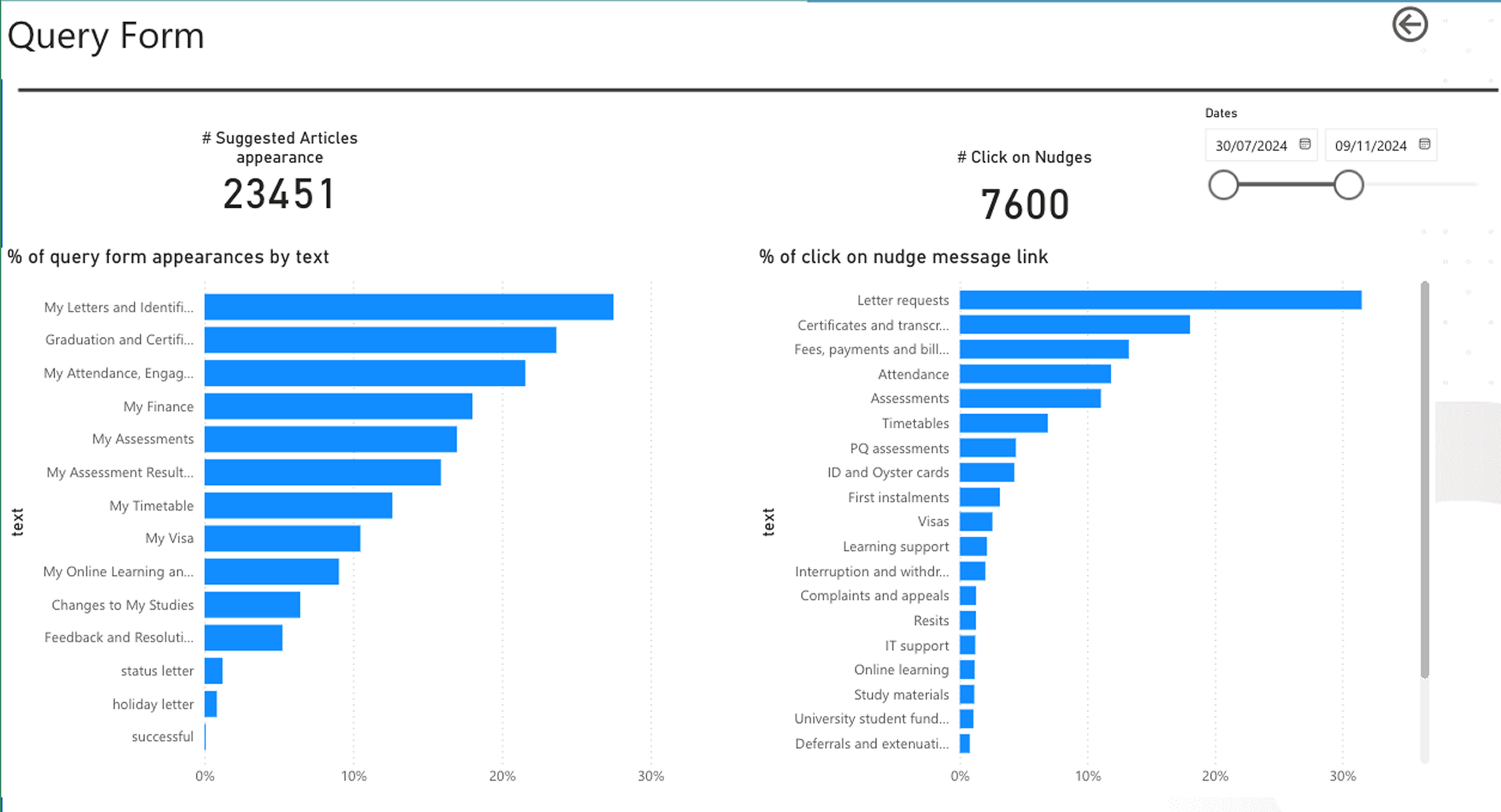
The query flow also became a valuable source of behavioural insight. By regularly monitoring the most common support requests submitted through the form, we were able to identify recurring student pain points and areas of confusion across the wider BPP experience.
This data helped inform:
future product priorities
improvements to help centre content
chatbot training opportunities
UX improvements across related journeys
operational focus areas for support teams
The query data created an ongoing feedback loop, allowing us to continuously refine the experience based on real student behaviours and needs.
TRADE-OFFS & CONSTRAINTS
We needed to reduce support load without blocking students from getting help.
The experience had to work within existing support tooling and ticketing systems.
We intentionally added light friction to discourage unnecessary escalation.
We prioritised clarity and guidance over speed to reduce misrouted tickets.
Figma prototype
THE SOLUTION
I designed a multi-step support flow that progressively guided students from category selection through to submission — with contextual help centre nudges, duplicate detection, and confirmation prompts built into the journey. The experience intentionally added light friction to encourage self-service before escalation.
KEY LEARNINGS & Impact
By making the query journey clearer and easier to use, we unintentionally increased ticket volume. Students who previously gave up were now confident enough to submit — creating more operational load, not less.
The insight: in support journeys, removing friction entirely can work against you.
This led us to pivot to a chatbot-first model, shifting the support journey to chatbot first, then self-service guidance, then escalation to "Raise a Query" only when needed. A/B testing confirmed the approach — most queries were resolved by the bot before escalation, allowing us to phase out the form entirely.
A/B testing confirmed the chatbot-first model — most queries were resolved before escalation, allowing us to phase out the form."